Is the Bio Bay in Puerto Rico Worth It? What you really see.
Yes. On a dark night the bio bay is one of the most memorable evenings in Puerto Rico. The glow appears when the water moves: every paddle stroke and every hand you trail beside the kayak lights up blue-green. It looks strongest under a dark sky, so pick a night near the new moon and the bay closest to where you are staying.
What you really see at the bio bay
You see light made by movement. The water looks dark until something stirs it, then it sparks blue-green around your paddle, your fingers and the kayak, and fades again a moment later. Each flash lasts about a tenth of a second, so the bay feels alive rather than lit up like a pool. The darker the sky, the more of it you notice.
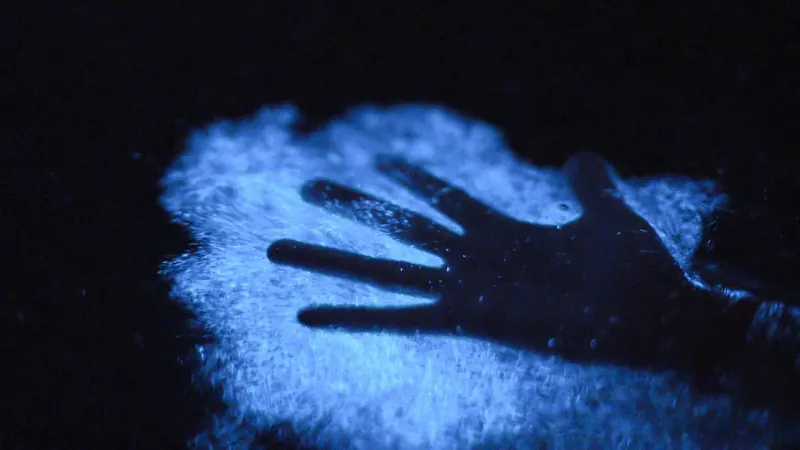
The light comes from Pyrodinium bahamense, a microscopic plankton that flashes when the water around it moves. Our guide to why the bio bay glows explains how it works, and the bio bay rules guide covers whether the glowing water is safe to touch.
Real pictures and video vs what your eyes see
Real pictures of the bio bay often show more glow than your eyes see at any one moment. Many night photos are long exposures, which add every flash over several seconds into one bright frame. A video plays the sparks in real time, closer to the live view. In person the glow moves with you: it follows your hand, then fades.
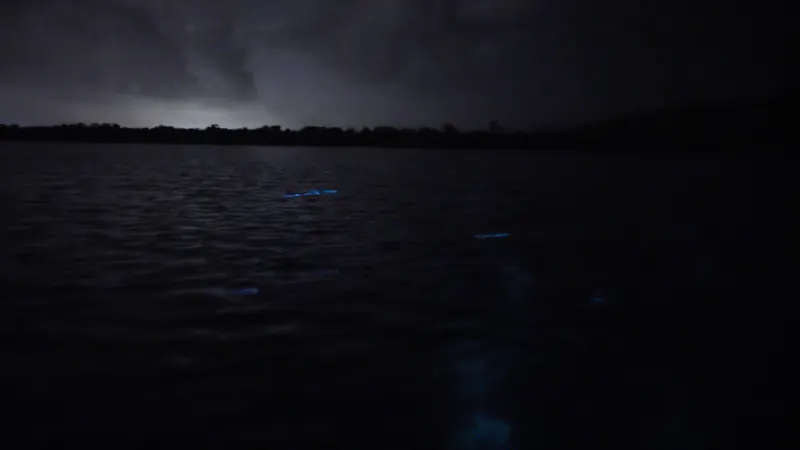
So enjoy the photos for what they are, and expect the live version to be a show you take part in. For tips on taking your own pictures and keeping your phone dry, see our what to wear and bring guide.
What makes a great bio bay night
A dark sky makes the biggest difference. Moonlight on the water hides the faint glow the way city lights hide stars, so the nights around the new moon, and nights when the moon rises late or sets early, show the most. On brighter nights at Laguna Grande, our guides bring a large tarp so the group can still see the glow.
The bio bay moon calendar rates every night of your trip by how much moonlight reaches the water during tour hours.
Tonight's skySee the darkest nights on the moon calendarEasy process, professional and fun tour guides.
What to expect on a bio bay tour, step by step
On the Laguna Grande tour in Fajardo, you check in at Kayak Village in Las Croabas at your booking time, and kayaks launch about 30 minutes later. After a kayak lesson on shore, you paddle a mangrove channel into the lagoon, drift in the glow while your guide explains it, then paddle back for snacks on shore. The tour takes about 2 hours.
Check in at Kayak Village
Arrive by your booking time. We text you the exact time on the day, since tours follow sunset.
Kayak lesson on shore
Paddle strokes, steering and a safety briefing. No kayaking experience needed.
Paddle the mangrove channel
On the early tour, our pick, there is still some natural light on the way in.
The lagoon in the dark
Every paddle stroke lights up. Pause, drift and take it in.
Back to shore
Snacks on shore, your dry change of clothes and the story to tell.
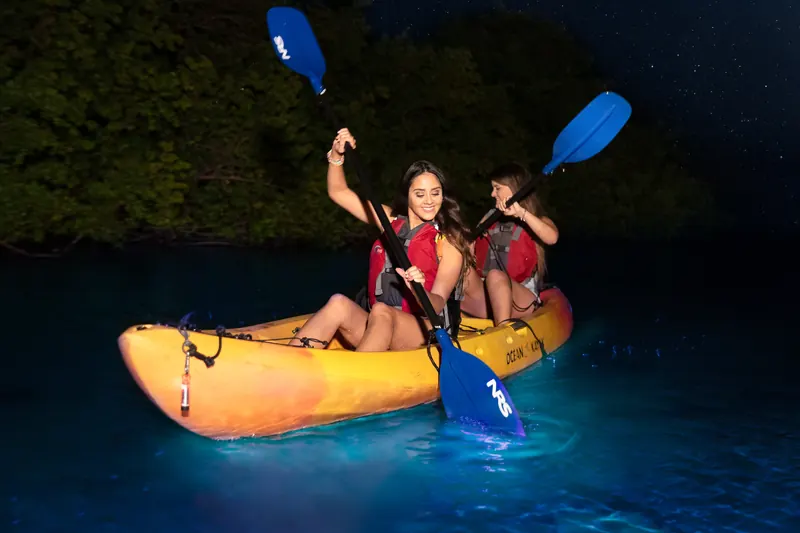
On Vieques, you meet in Esperanza, ride the van to Mosquito Bay and spend 45 minutes to an hour on the water in a clear kayak, about 1.5 hours in all. In La Parguera, the time on the water begins with a sunset boat ride to Caracoles island, then an 8-minute boat ride to the glowing lagoon.
Which bio bay is worth it for your trip
The best bay is the one that fits where you are staying. Laguna Grande in Fajardo suits visitors in San Juan or on the east coast, with hotel pickup available. Mosquito Bay suits guests staying on Vieques, since there is no same-day ferry back. La Parguera suits travelers on the southwest coast who want a sunset boat ride first.
Compare all three in our best bio bay in Puerto Rico guide, see where the bays are, or add up the whole night with what a bio bay tour costs.
Is the bay still glowing? Yes: Puerto Rico's three bays glow year-round, and after past storms each one that dimmed recovered its glow. For rain, storms and what lives in the bay, see the bio bay rain and weather guide.
Is the bio bay worth it: questions
Is the bioluminescent bay in Puerto Rico worth it?
Yes, on a dark night the bioluminescent bay is one of the most memorable evenings in Puerto Rico. The water sparks blue-green wherever your paddle or hand moves. Pick a night near the new moon on the moon calendar, and choose the bay closest to where you are staying.
Is the Fajardo bio bay worth it?
Yes, the Fajardo bio bay is a great pick for visitors staying in San Juan or on the east coast. The Laguna Grande kayak tour runs every night, takes about 2 hours, and includes a mangrove channel paddle and time in the glowing lagoon. It is $85 per person, or $145 with hotel pickup.
Is La Parguera bioluminescent bay worth it?
Yes, La Parguera is worth it for travelers on the southwest coast who want a sunset boat ride before the glow. Our La Parguera tour includes sunset at Caracoles island, then an 8-minute boat ride to the glowing lagoon. It runs on select nights each month, from $169 per person.
Is Mosquito Bay worth it?
Yes, Mosquito Bay is worth it if you are staying on Vieques. The bay is on the island of Vieques, not the main island, and there is no same-day ferry back after the tour. Our Vieques tour uses two-person clear kayaks, so you watch the glow under the hull, for $85.
Does the bio bay look like the pictures?
The bio bay often looks different from the pictures. Many night photos are long exposures that add several seconds of flashes into one bright frame. In person you see quick blue-green sparks wherever the water moves, fading a moment later. A dark night near the new moon shows the most glow.
How bright is the bio bay?
How bright the bio bay looks depends mostly on the sky. On a dark night the water sparks clearly around every paddle stroke; under a bright moon the same glow is harder to see. Moonlight, wind, tides and weather all play a part, so nobody can promise an exact level of brightness.
Can you see the bio bay during a full moon?
Yes, the water still glows during a full moon, but bright moonlight makes it harder to see. On brighter nights at Laguna Grande in Fajardo, our guides bring a large tarp to block the light so the group can see the glow. If your dates are flexible, pick a darker night on the moon calendar.
Is the glow guaranteed?
No one can guarantee how bright the glow will be on a given night, because it changes with moonlight, wind, tides and weather. Puerto Rico's three bays glow year-round, and a dark night gives you the best view. On the Fajardo tour, cancellation is free up to 24 hours before your tour.
Which bio bay is known for brightness?
Mosquito Bay on Vieques is the bio bay known for brightness: Guinness World Records named it the brightest bioluminescent bay. Each night still depends on the moon and the weather, so the darkest night of your trip at the bay closest to where you are staying is the best choice.
How long does a bio bay tour take?
The Fajardo bio bay kayak tour takes about 2 hours, from check-in at Kayak Village to snacks back on shore, with kayaks launching 30 minutes after your booking time. The Vieques tour takes about 1.5 hours, with 45 minutes to an hour on the water in a clear kayak.
Is the bio bay tour good for first-timers?
Yes. The Fajardo bio bay kayak tour is a great first bio bay night: no kayaking experience is needed, a kayak lesson on shore comes first, and your guide stays on the water with the group the whole way. The kayaks seat two, so you share the paddling, and ages 6 and up can join.
What do you actually see at the bio bay?
At the bio bay you see blue-green sparks wherever the water moves: around your paddle, your fingers and the kayak. Each flash lasts about a tenth of a second and then fades, so the glow follows your every move. On a dark night near the new moon the sparks are easiest to see.
Make it a dark night in Fajardo
Pick a night near the new moon, and we will meet you at Laguna Grande with a two-person kayak and a guide. Send us your dates on WhatsApp.