Why Does the Bio Bay Glow? The plankton behind Puerto Rico's glowing water.
The glow comes from Pyrodinium bahamense, a single-celled plankton called a dinoflagellate. When the water around it moves, a chemical reaction inside the cell gives off a quick flash of blue-green light. Puerto Rico's three bio bays hold huge numbers of them because their narrow openings keep the plankton from washing out to sea.
Meet Pyrodinium bahamense, the plankton behind the glow
Pyrodinium bahamense is a microscopic dinoflagellate: a single-celled organism that drifts in the water as plankton. It is the species behind the glow in Puerto Rico's bio bays, and it flashes bluish-green whenever the water around it is disturbed. One cell is far too small to see, so what you notice is thousands of them flashing at once.
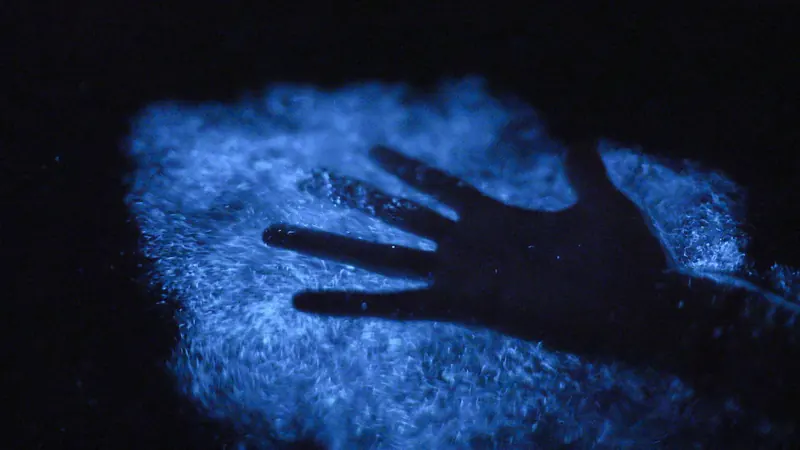
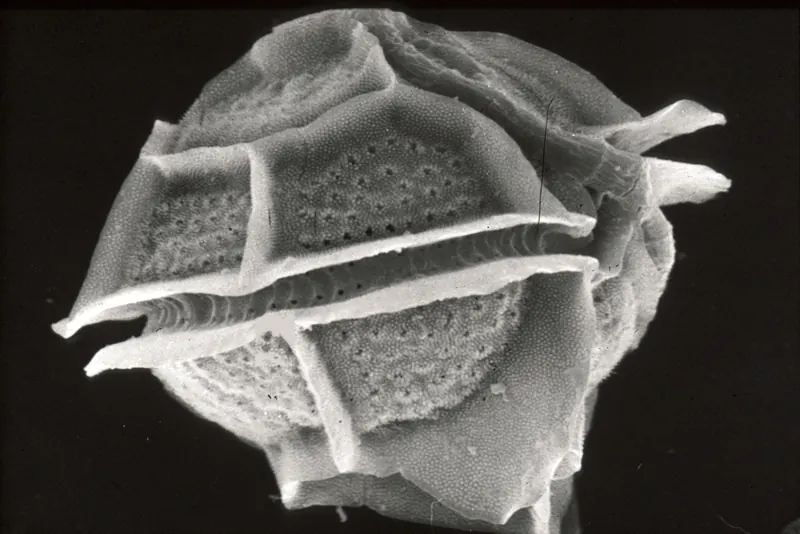
Under a microscope it looks nothing like a light show. The cell is wrapped in armored plates, which you can see in the electron micrograph below.

How the flash works, in plain words
Bioluminescence is light made by a living thing through a chemical reaction inside its body. In dinoflagellates, a molecule called luciferin reacts with an enzyme called luciferase. When the water moves and jostles a cell, the inside of it turns more acidic, which frees the luciferin to react and switches the light on for about a tenth of a second.
The definition comes from NOAA's Ocean Service. The chemistry was worked out in lab studies of a related dinoflagellate, Gonyaulax, summarized by the bioluminescence lab at UC Santa Barbara: a binding protein holds the luciferin safe at a pH of about 8 and lets it go when the pH drops to about 6. The same source notes that dinoflagellate luciferin is thought to come from chlorophyll.
See it on a dark night: our Fajardo kayak tour runs every night of the year, and our Vieques clear-kayak tour suits guests staying on the island. Wondering whether the glowing water is safe to touch? Our bio bay rules guide covers what the sources say.
Why these bays hold so much glow
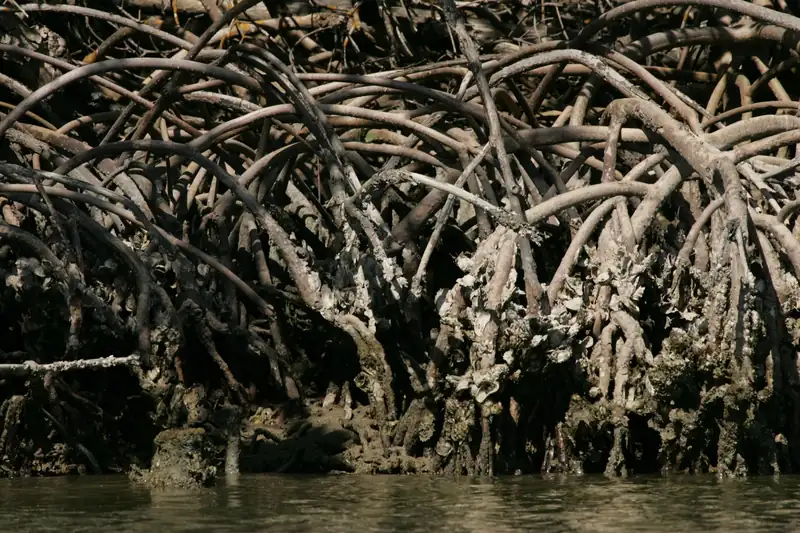
A bio bay needs the plankton to stay put. Scientific American describes the glowing bays as lagoons with an opening narrow enough to keep the organisms from escaping, so they build up in the calm water instead of washing out to sea. Mangroves line their shores: Mosquito Bay's reserve protects the bay and its mangrove forest, and Laguna Grande is a mangrove-lined lagoon.

What is a bioluminescent bay?
A bioluminescent bay is a sheltered body of salt water that holds so many light-making plankton that the water glows wherever it moves. Puerto Rico has three that glow year-round: Mosquito Bay on Vieques, Laguna Grande in Fajardo and La Parguera in Lajas. Each one is protected, and each is visited on guided tours by kayak or boat.
How many bioluminescent bays are in Puerto Rico?
Puerto Rico has three bioluminescent bays that glow year-round, as the island's official tourism board lists them: Mosquito Bay on Vieques, Laguna Grande in Fajardo and La Parguera in Lajas. Each sits in a protected area, and each glows a little differently because the number of plankton in the water rises and falls through the year.
- Mosquito Bay, Vieques. Protected by the Vieques Bioluminescent Bay Natural Reserve and a National Natural Landmark since 1980. Guinness World Records names it the brightest bioluminescent bay, and a year-long study reported higher average Pyrodinium counts there than at La Parguera. Boats with gasoline or diesel motors were already banned on the bay by 2007.
- Laguna Grande, Fajardo. Inside the Las Cabezas de San Juan nature reserve. A three-year study of the lagoon found Pyrodinium counts that rose and fell widely, higher mainly from April to September, while a non-glowing plankton, Ceratium furca, was more common in the dry season.
- La Parguera, Lajas. Known locally as Bahía Fosforescente, inside the La Parguera Nature Reserve, set up in 1979 and managed by Puerto Rico's Department of Natural and Environmental Resources.
The bays are reached on guided tours, and two of ours put you right in the glow by kayak. Our map of where the bio bays are shows which one is closest to you.
What makes one night brighter than another
The plankton glow all year, but how much you see changes night to night. Moonlight is the big one: it washes out the faint flashes, so dark nights near the new moon show the most. Movement matters too, because the water only lights up where something stirs it. Wind, tides and weather also shape the glow.
The bio bay moon calendar rates every night by the moonlight that reaches the water during tour hours. Daylight hides the flashes completely, and in many light-making dinoflagellates an internal daily clock keeps the light strongest at night, as a review of dinoflagellate rhythms explains. For storms and rainy nights, see the rain and weather guide, and for the season, the best time to see the bio bay.
Tonight's skySee the darkest nights on the moon calendarWhy the bio bay glows: questions
Why does the bioluminescent bay glow?
The bioluminescent bay glows because of Pyrodinium bahamense, a microscopic plankton called a dinoflagellate. When the water moves, a chemical reaction inside each cell gives off a quick flash of blue-green light. Puerto Rico's bays hold huge numbers of them, because narrow openings keep the plankton from washing out to sea.
What causes bioluminescence in Puerto Rico?
Bioluminescence in Puerto Rico is caused by Pyrodinium bahamense, a dinoflagellate that lives in the island's three bio bays: Mosquito Bay on Vieques, Laguna Grande in Fajardo and La Parguera in Lajas. Each cell makes light through a reaction between luciferin and the enzyme luciferase when the water moves.
Why does the water glow when you move it?
The water glows when you move it because the motion disturbs the plankton. Moving water jostles each Pyrodinium cell, the inside of the cell turns more acidic, and that frees a molecule called luciferin to react and make light. The flash lasts about a tenth of a second, so the glow follows your paddle or hand.
What is a bioluminescent bay?
A bioluminescent bay is a sheltered body of salt water holding so many light-making plankton that the water glows wherever it moves. Its narrow opening keeps the plankton from washing out. Puerto Rico has three that glow year-round: Mosquito Bay on Vieques, Laguna Grande in Fajardo and La Parguera in Lajas.
How many bioluminescent bays are in Puerto Rico?
Puerto Rico has three bioluminescent bays that glow year-round: Mosquito Bay on the island of Vieques, Laguna Grande in Fajardo on the east coast, and La Parguera in Lajas on the southwest coast. Each sits in a protected natural area and is visited on guided tours by kayak or boat.
What is Pyrodinium bahamense?
Pyrodinium bahamense is the microscopic dinoflagellate that lights up Puerto Rico's bio bays. In Florida, scientists also study it as a source of saxitoxin in shellfish and puffer fish. It is a single-celled organism wrapped in armored plates, and it flashes bluish-green whenever the water around it is disturbed.
Why is Mosquito Bay so bright?
Mosquito Bay on Vieques holds a very high concentration of Pyrodinium bahamense. A year-long study reported higher average counts there than at La Parguera. The bay and its mangrove forest are protected by a natural reserve, and boats with gasoline or diesel motors were banned there by 2007, which keeps the water calm.
Is the glow from algae or plankton?
The glow comes from plankton, specifically the dinoflagellate Pyrodinium bahamense, a single-celled organism that drifts in the water. You may see it called algae in some guides, since dinoflagellates are often grouped with algae. Either way, the scientific name is the clearest answer, and it is not a bacterium.
Does the bio bay glow every night?
Yes. Puerto Rico's three bioluminescent bays glow year-round, every night. How much glow you see changes with moonlight, wind, tides and weather, and dark nights near the new moon show it best. The plankton count also rises and falls through the year, so no night can promise an exact brightness.
Why does the moon affect the bio bay?
The moon affects the bio bay because moonlight on the water makes the faint flashes harder to see, the way city lights hide the stars. The plankton keep glowing, but your eyes notice much less of it. Nights when the moon is down during the tour, around the new moon, show the glow best.
Can you touch bioluminescent water?
Yes. On a bio bay kayak tour you can trail your hand through the water from the kayak and watch it light up around your fingers. On our Fajardo tour at Laguna Grande, guests do this from two-person kayaks, and every movement leaves a short trail of blue-green light behind it.
How long does each flash of bioluminescence last?
Each flash of bioluminescence in Puerto Rico's bays lasts about a tenth of a second. That is why the glow seems to follow your paddle or hand: every movement sets off new flashes from thousands of cells at once, and each one fades almost as soon as it appears. Keep moving and the light keeps coming.
Does the bio bay glow during the day?
You will not see the bio bay glow during the day. The flashes are faint, so daylight hides them, and in many light-making dinoflagellates an internal daily clock keeps the light strongest at night. That is why every bio bay tour goes out after dark, and why a dark night shows the most.
Is there a glowing beach in Puerto Rico?
The glowing water Puerto Rico is known for is in its three bioluminescent bays, not on its beaches: Mosquito Bay on Vieques, Laguna Grande in Fajardo and La Parguera in Lajas. The glow builds up in calm lagoons with narrow openings, so you see it on a guided kayak or boat tour at night.
See the glow for yourself
Paddle Mosquito Bay in a clear kayak if you are staying on Vieques, or Laguna Grande in Fajardo any night of the year. Tell us where you are staying and we will match the bay to your trip.